April 26, 2025
Should Plate or Rotary Type Be Preferred in Heat Recovery Systems?
We determine the most suitable solution for your project, balancing the high thermal efficiency of rotary systems with the leakage reliability of plate systems.
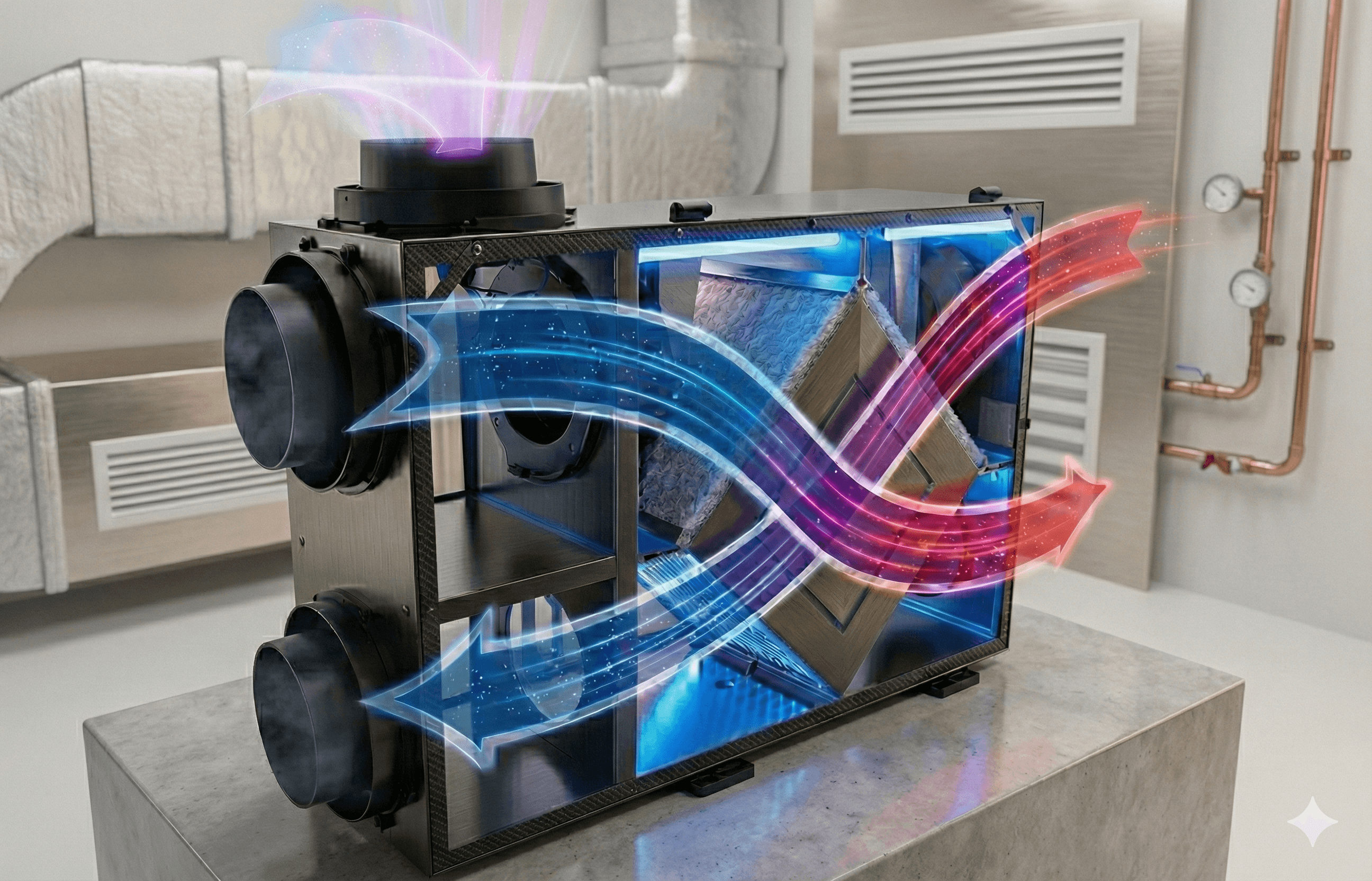
The most critical "trade-off" point of mechanical design in industrial plants and commercial buildings is the selection of the heat recovery unit. A wrong choice made at the design stage results either in operating costs (OPEX) remaining high for years or in the violation of hygiene standards (GMP, DIN 1946-4).
A question we frequently encounter in the field at Axvorn Engineering is: "Should I prioritize investment cost (CAPEX) or operational efficiency?"
In this article, we analyze Rotary and Plate heat recovery systems from an engineering perspective in terms of thermodynamic efficiency, leakage risks, and investment payback periods.
1. Rotary Heat Recovery (Rotary Wheel): High Efficiency, Moisture Transfer
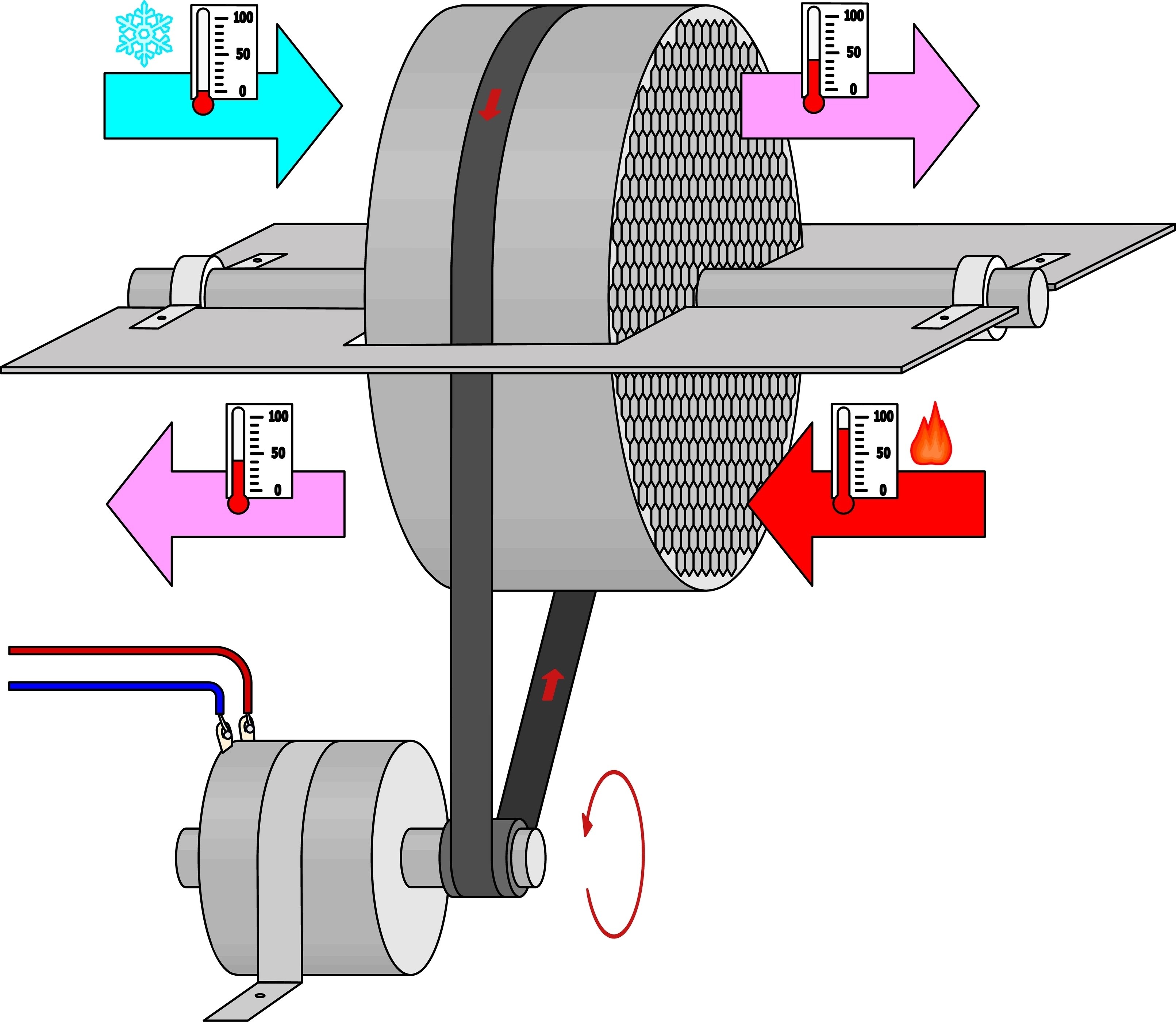
Rotary type heat recovery units work on the principle of a continuously rotating wheel (matrix) placed between the air streams. The heat energy taken from the exhaust air is stored on the rotating metal surface and transferred to the fresh air.
Technical Advantages
Maximum Efficiency: It can reach thermal efficiency values ranging from 75% to 85%. This is one of the highest efficiency rates on the market.
Latent Heat Transfer: Sorption-coated rotors transfer not only temperature (sensible heat) but also moisture (latent heat). This feature reduces chiller investment in facilities where humidity control is critical and the cooling load is high.
Compact Design: It reduces the unit footprint, saving space in the mechanical room.
Risks and Limits
Cross-Contamination: 100% separation of air cannot be guaranteed. There is a 3-5% risk of mixing (EATR - Exhaust Air Transfer Ratio) between the exhaust air and the fresh air.
Restriction of Use: It must not be used in areas containing toxic gases, heavy odors, or pathogen risks (Hospitals, Pharmaceutical Manufacturing, Chemical Laboratories).
2. Plate Heat Recovery (Plate Heat Exchanger): Full Hygiene, Zero Contact
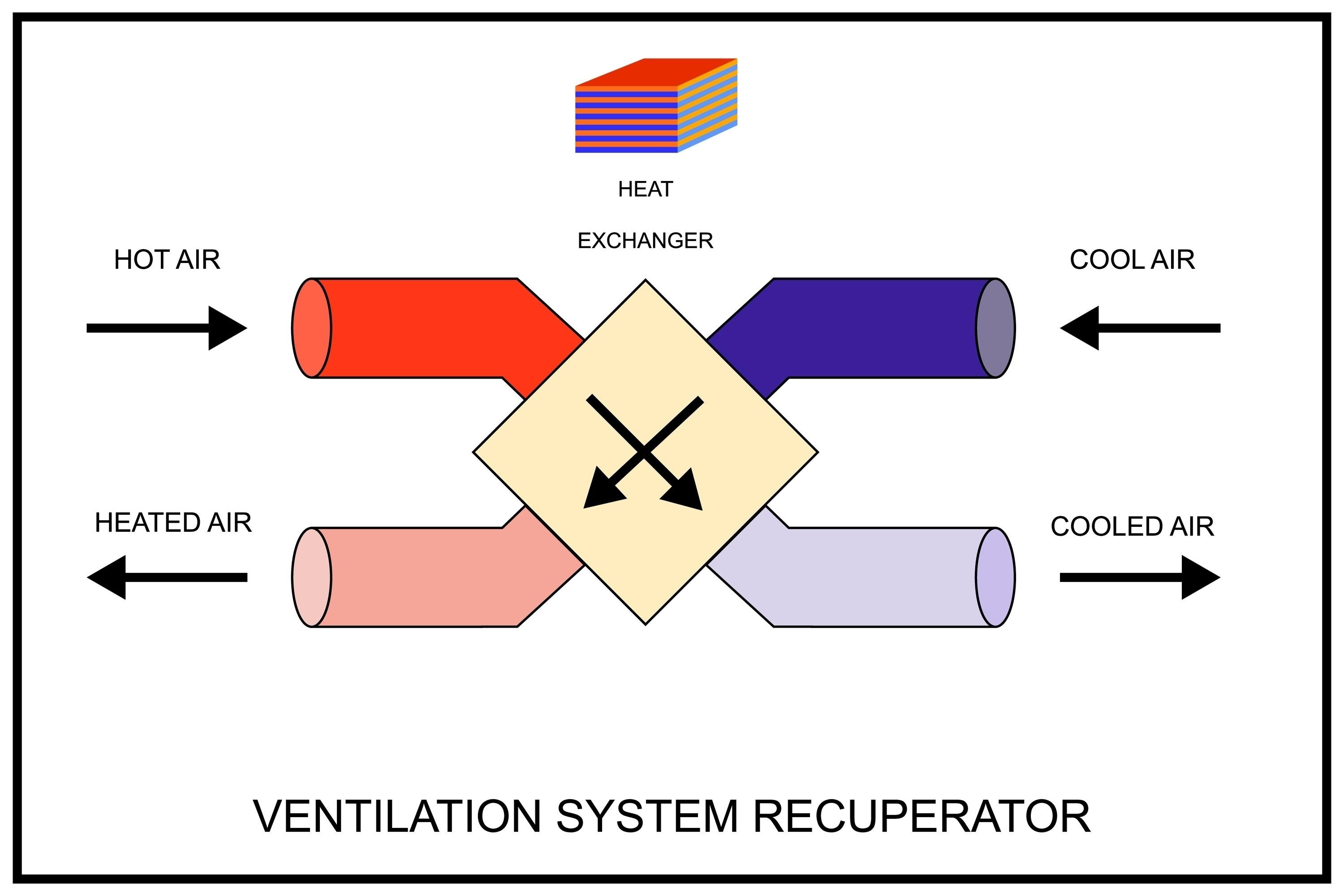
Plate heat exchangers are static systems where fresh air and exhaust air are completely separated from each other by thin metal plates. The air streams do not mix; heat transfer occurs solely across the plates.
Technical Advantages
100% Airtightness: Exhaust air and fresh air do not come into physical contact. This feature makes plate systems the only valid option for "Hygienic Air Handling Units".
Ease of Maintenance: There are no moving parts (motor, belt, bearing). The risk of failure and maintenance costs are much lower compared to rotary systems.
Compliance with Standards: It is mandatory in Pharmaceutical, Food, and Hospital projects (DIN 1946-4).
Risks and Limits
Lower Efficiency: Efficiency is around 50-60% in standard cross-flow systems and around 70% in counter-flow systems. Its thermal efficiency is slightly lower compared to rotary systems.
Risk of Freezing: In very cold climates, a "Bypass" or "Pre-heater" must be used to prevent condensation water on the exhaust side from freezing, which can seasonally reduce efficiency.
3. Comparison Matrix: Which System Is Right for You?
As an engineering firm, our recommendation is this: The choice is determined by the needs of the process, not the brand.
Criterion | Rotary | Plate |
Thermal Efficiency | Very High (75-85%) | Medium/High (50-70%) |
Moisture Transfer | Possible (Sorption) | Not Possible (Usually) |
Hygiene / Leakage | Risky (Mixing may occur) | Excellent (100% Separation) |
Maintenance Need | Medium (Moving parts) | Low (Static) |
Initial Investment Cost | Low/Medium | Medium/High (In counter-flow) |
Recommended Sectors | Malls, Hotels, Offices, Residential | Hospitals, Pharma, Food, Labs |
Conclusion: Let's Make the Most Profitable Choice for Your Facility Together
A heat recovery system is installed once and directly affects your operating expenses for 15-20 years. The wrong choice of heat exchanger means thousands of dollars thrown into the air every month.
As Axvorn Engineering, we analyze the needs of your facility and design the most suitable (Efficient and Safe) system for you with an impartial engineering approach.
Do not put your energy expenses and process safety at risk.
Get a Free Technical Evaluation for Your Project in 48 Hours