April 26, 2025
Energy Efficiency in Industrial Facilities: The Hidden Power of HVAC Systems
HVAC systems account for the largest share of energy consumption in industrial facilities. So, how is energy efficiency achieved through correct engineering and system design? Discover with AXVORN’s experience in the field.
1. A Silent Revolution in Industrial Energy Consumption: HVAC Systems
Many factory managers focus on production machinery in energy analyses —
but a significant portion of the bill comes from ventilation, air conditioning, and fan systems.
According to research:
🔹 On average, 35% of total energy consumption in industrial facilities stems from HVAC systems.
🔹 Most of this ratio is lost energy wasted due to incorrect capacity selection and inefficient fan systems.
In other words, if you are looking to save energy, first you must learn to manage the air.
2. The Cornerstone of Energy Efficiency: Engineering Calculation
For AXVORN engineers, energy efficiency is not an "extra feature," it is the core of the system.
Before each project begins, three core analyses are performed:
Heat Load Analysis: Prevents unnecessary capacity losses.
Airflow Rate Optimization: Minimizes in-duct pressure loss.
Fan Selection Simulation: Determines the correct blade type and speed range.
As a result, the system runs with maximum performance without consuming unnecessary energy.
3. EC Fans: Small Change, Big Savings
When energy efficiency is discussed, fan motors often take a back seat.
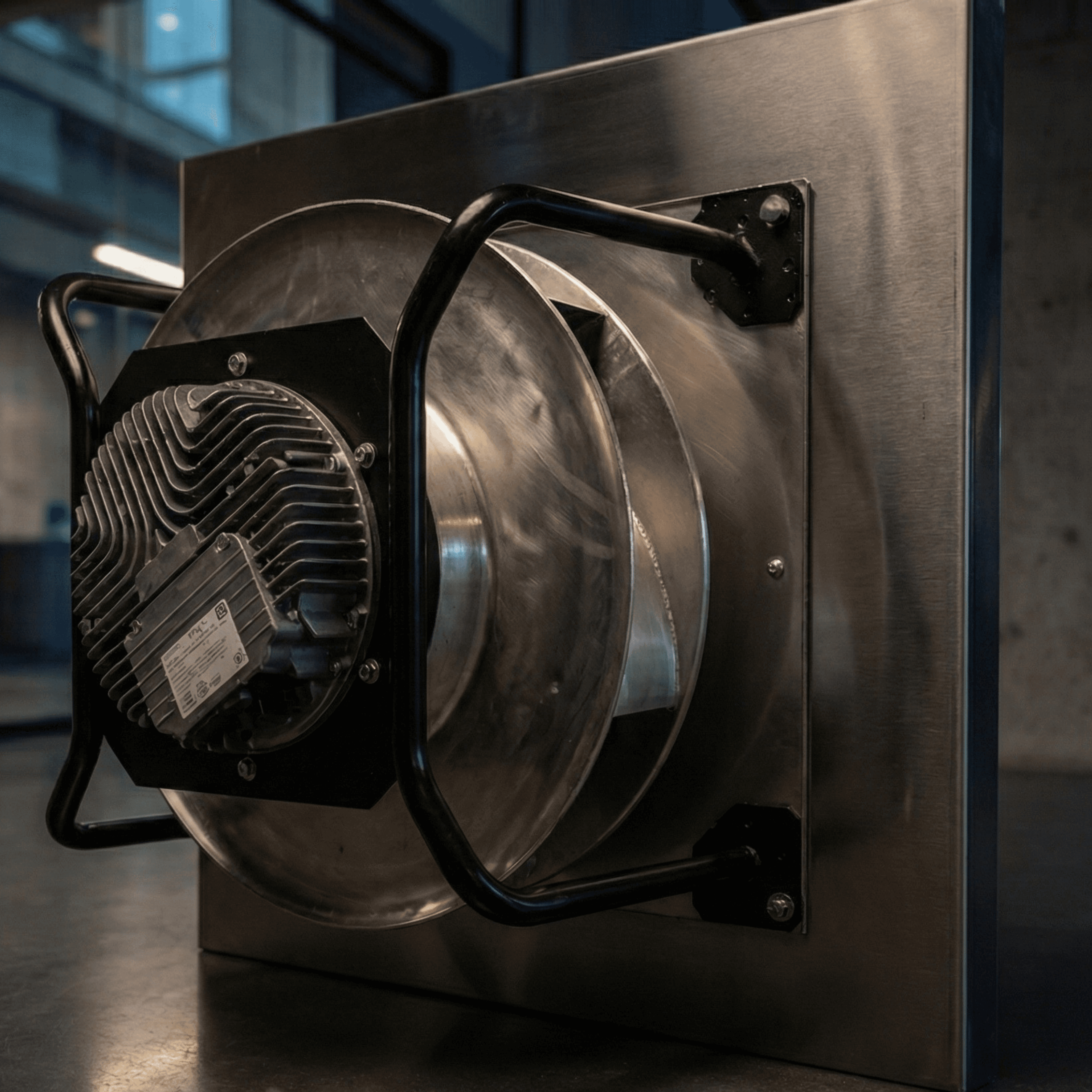
However, EC fan technology has revolutionized industrial HVAC systems.
Up to 30% energy savings compared to traditional AC fans,
Quiet operation,
Smart energy management with digital speed control.
EC fan technology is used as standard in all of AXVORN's new-generation AHU and HRU systems.
4. Closing the Loop with Heat Recovery Systems
One of the areas where the most loss occurs in factories is exhaust air.
Most systems throw that hot air out, causing significant energy loss along with it.
The heat recovery solutions (HRU) developed by AXVORN put this energy back into the cycle, preheating or precooling the fresh air.
In this way:
Annual energy consumption is reduced by 25%,
Carbon emissions are lowered,
System lifespan is extended.
5. Digital Control Systems: Manage the Energy You Cannot See
Energy efficiency is achieved not only through hardware but also through control.
The smart control systems used by AXVORN:
Monitor airflow in real-time,
Optimize temperature, humidity, and pressure changes,
Automatically limit unnecessary fan operation.
In other words, the system manages itself —
and unnecessary energy consumption is eliminated.
6. AXVORN's Approach: From Engineering to Performance
For us, energy efficiency is not a marketing promise, but a measurable result.
When the project is completed, we present the customer not just with a product, but also with an energy savings report.
This approach is the biggest reason why AXVORN is preferred in international projects.
Conclusion: Preserving Energy is Preserving the Future
Every factory manufactures.
But only some of them use their energy wisely.
AXVORN makes industrial facilities more efficient and sustainable through its engineering knowledge.
Because for us, engineering is not just calculation, it means investing in the future.